If biology is the study of life... then isn't life the study of biology?
Hello! Glad you looked around my blog! You've reached it to my Biology Page. Here, you will find several papers and projects that I have done, starting with a few recipes for cancer-fighting fruit salad, to a 'letter' that describes STD Herpes, to an essay I wrote on Life Support. The purpose of this Bio Blog is to show what I am learning and to show that I can present it in an agreeable way. Also, it's to inform the public of what we're doing in class, so we can have the community's support and involvement. My biology teacher at Animas Highschool is Ms. Colleen Dunning. Thank you for viewing and looking around my blog!
Carly
To view my Biology Blog, please visit:
http://carly-studyoflife.blogspot.com/
To view my group's Circulatory Blog, please visit:
http://circulatoryblog.blogspot.com/
*** To learn more about our Circulatory System project, please scroll down until you see 3 red asterisks- ***
~~~~~~~~~~~~~~~~~~~~~~~~~~~~~~~~~~~~~~~~~~~~~~~~~~~~~~~~~~~~~~~~~~~~
I love black labs!The black lab is a very respectable animal and pet. The labrador retrievers are known as gentle, friendly, loyal pets. An interesting thing I learned about them through my own experience from when my family and I were adopting our own black lab was that, even if the parents of the pups are yellow, the puppies could be an intirely different color! My dog, Lucy's, parents were yellow and brown, while Lucy and almost the rest of the litter were black! It must be genetics, or something. Within the Labrador Retrievers, there are 'English' and 'American' breeds. I'm not for sure which is which, but I think the American breed has a slimmer, longer head, while the English breed has a rather boxy head. Another thing I learned about black labs from my experience with them is that smartness really depends on the dog. Some dogs are just dumb, but others are way sharp. I'm not sure why or how they get to be this way, but they do. Labrador retrievers were originally used for hunting, specifically duck hunting. They have webbing between their toes, thick coats that can get rid of liquid easily, and deep chests that can help when going through the water. They are excellent swimmers.
~~~~~~~~~~~~~~~~~~~~~~~~~~~~~~~~~~~~~~~~~~~~~~~~~~~~~~~~~~~~~~~~~~~~~~~~~~~
Cancer- Fighting Fruit Salads
Very Berry
Prep Time: 5 min / Level: Easy / Yield: 6 servings
Ingredients
- 1 pint fresh strawberries, tops cut off, cut in half
- 1 pint fresh blueberries
- 1 pint fresh raspberries
- 1 tablespoon good balsamic vinegar
- ¼ cup sugar
- Fresh mint, for garnish
Directions
Place 6 glasses in the refrigerator
In a large bowl, combine berries, vinegar, and sugar. Mix gently with a spoon. Cover securely with plastic wrap and refrigerate for 30 minutes to 1 hour.
Spoon the berries into the chilled glasses. Garnish with a sprig of fresh mint.
www.foodnetwork.com/recipes/barefoot-contessa/very-berry-fruit-salad-recipe/index.html
---------------------------------------------------------
Prep Time: 5 min / Level: Easy / Yield: 4 servings
Ingredients
· 1 cup fresh strawberries
· 1 cup fresh raspberries
· 1 cup fresh blueberries
· ½ cup fresh mint leaves
· 1 teaspoon orange juice
· 1 banana, sliced
· ¼ cup maple syrup
· 1 teaspoon vanilla
Directions
Place the strawberries, raspberries and blueberries in a medium glass bowl. Add mint leaves and orange juice and toss. Place fruits in serving bowls and place banana slices on top
-------------------------------------------------------------------
Fruit Salad
Prep Time: 5 min / Level: Easy / Yield: 8 servings
Ingredients
· 4 oranges
· 2 grapefruits
· 4 bananas
· 6 cups fresh berries
· 2 apples
· 2 bunches of grapes
· 8 tablespoons honey
· 2 vanilla beans, optional
Directions
Trim off all the peel from oranges and grapefruits. Halve or quarter them, and then slice crosswise into thin pieces. Halve or quarter strawberries, if used, if large. Peel and slice the bananas. Put in grapes whole, or slice in half. Toss all the fruit in a large bowl.
Stir the honey and vanillas beans, if using, in a small bowl and microwave until just warmed and syrupy, less than 45 seconds. Toss with fruit and let cool. Transfer to an air-tight container.
~~~~~~~~~~~~~~~~~~~~~~~~~~~~~~~~~~~~~~~~~~~~~~~~~~~~~~~~
Herpes (what not to get): A 'letter' from the reciever to the giver
My darling, lovely, wuggly-buggly sir,
I do not know how to put it otherwise, but those disgusting red ‘beauty spots’ that you’ve had ‘for ages’ is actually Herpes. It is genital HSV-2, to be exact, which is the most common kind of Herpes. I’m actually one out of every five women who have it. Lucky me. And you must be one of every six men who have it. Aren’t you a luck duck? Herpes can only be transmitted through sexual contact, you know. And since I am a loyal gal, it had to be from you, you butt hole. I do not know if you’ve realized it, but it must be true, because now I’ve developed horrible sores in my genitals. They are red and they hurt. But before this, I was feeling tired and run-down. I thought it was the flu or some cold. I had a fever, and my throat got those weird swollen glands on it. I went to my doctor a few days ago, and she said that a lot of people don’t even realize they have it, because they have no side effects. Don’cha love side effects? I know I do! But at least I know I have it, so I can hopefully stop it in its tracks. But thank goodness I don’t have HSV-1, also, which is where your mouth is infected by way of genital-oral contact. Bleh. It’s less common. With all my luck, you’d think I would have it. It doesn’t figure out. Anyways, I knew I had it was when I got a ton of really bad sores. That first week was awful. It was about two weeks, I figure, from when I must have gotten it. Two weeks, my doctor told me, was usually the time it takes for the virus to muster up some sores on you. Thankfully they began to heal two-four weeks after. Then I got a second ‘crop’, and after that, the ‘primary episode’ is over. As I said before, most people don’t even know they have it! Their symptoms are practically nothing, or they think it’s some other skin disease, or they just think it’s a bug bite, or something. But let me ask you this: Have you ever been bitten there? I don’t think so. So I don’t know what they would be thinking if they thought it was a bug bite. Chicken brains. Ms. Doctor informed me that I will probably have four to five more outbreaks this year, and that they will decrease after time. She even said some people don’t even realize they had it until years later. Must be you, huh, butter nut? Also, she said it can be very hard on people with low immune systems, (not me, I’m usually as healthy as a horse,) and that it also can be very emotionally degrading, and that for certain patients, therapy is recommended. Personally, I just think she’s trying to recommend me to her friend the physiatrist. But let me tell you here, buddy, if there’s anybody who’s going to be paying for it, it’s you! I’ll put it on your bill. More on what I actually have: Herpes is a virus, my doctorette told me, that can be contracted either from the sores themuglyselves, or from skin that does not seem to have sores but is still infected, whatever that means. Unfortunately for you, numbskull, there is not stinkin’ cure for Herpes. Thanks a lot, you…well, I won’t say it. But I’m thinkin’ it. You know what I’m thinking. U-huh. That’s what you are. Anyhow, there are certain treatments, like an antiviral medication, which can shorten and even prevent outbreaks during the time you take it. ‘Daily suppressive therapy’ is also recommended, which makes it so that you don’t pass along (as much, at least,) of the virus. (I’ll put it on your bill.) There are also long-term effects, in which Herpes might play a role in spreading HIV, the virus that causes AIDS. That is, it makes you more susceptible to HIV. And there’s also a problem with having children: If I’ve got a bun in the oven and have active Herpes when I’m about to deliver a fresh roll, I’d probably have to have a C-Section. It’s rare that the baby will get the Herpes that the mother has, thankfully. Let me tell you about the embarrassing process on how they diagnosed it- I’m sure it will only take two words to tell you: Sore sample. Let me tell you, I was a tomato. A sunburned polar bear. A beet. I had to get swabbed, and that’s while I had the sores. If you don’t have them at the moment, you have to do a blood test. I hate needles, but the blood test, though not always 100%, may have been preferable. The only way Herpes can be prevented is to abstain, or only have one partner and have them tested. Even condoms can’t fully protect you from ulcers. If there are lesions (sores), or any other side effect present, just say no. Even if you don’t have side effects, you could have it and give the wrapped package to somebody else. And I’m sorry to say this, but I’ve decided to become virgin. I think it’s possible. Just don’t do it anymore. Anyhow, I don’t think I could bear the weight on my shoulders of passing it on to other innocent bystanders as you passed it on to me. So, to keep my promise, I’ve decided to move to Wyoming
*S.T.D.* ;)
~~~~~~~~~~~~~~~~~~~~~~~~~~~~~~~~~~~~~~~~~~~~~~~~~~~~~~~~~~~~~
Life Support
Medical life support is medical interference to help keep someone living, paraphernalia (equipment) that gives the body what it needs to keep living if they are unable to live on their own. Methods of life support include oxygen, fluids, feeding tubes, chemotherapy, antibiotics, intravenous fluids, mechanical respiration, heart and lung bypass instruments, defibrillation equipment, and renal dialysis. It is generally acknowledged that a person would need life support if they went into a coma, was suffered from serious traumatic injuries, had a stroke or heart attack, or if a vital organ failed. (What is Life Support, 2010)
Life support, like stem cell research, is an issue that people tend to have strong feelings about. I find the root of why it can be such a big deal is because it has to do with life- taking it and giving it- which, in some people’s opinions, is ‘playing God’, which no human should do, because of the obvious. Others argue that putting a person on life support is taking someone's dignity from them in their last minutes. Others argue that if it can save someone's life or give their family a little more time with them, it's worth it. If you have your own feelings about it, and prefer to make your own decision before it happens, you can issue a ‘do not resuscitate’ (DNR) order, which restrains your family from putting you on life support. (Deciding to Withhold or Withdraw Life Sustaining Measures, 2009) Another option is that you may assign a ‘surrogate’, a person you trust, to make the decision for you. If you do neither, the decision goes to the next of kin, according to the law.
Jack Kevorkian, also known as ‘Dr. Death,’ is surrounded by controversy for assisting the suicides of 130 people between 1990 and 1999. (Jack Kevorkian, 2010) The actual term of his ‘mercy killing,’ is called euthanasia. Kevorkian has argued that what he did prevented the suffering of people, and that he has ‘allowed them to die with dignity.’ There were two different ways he did this, including the ‘suicide machine,’ which was about $45 worth of materials, and consisted of three dripping bottles that contained a saline solution, a painkiller, and the poison, which was potassium chloride. Kevorkian would inject the needle into the patient’s arm, and they themselves would push the button that would administer the fluid. The other way was to give the patient a gas mask with carbon monoxide to breathe in. One of the biggest controversies his work has started would be the 1990 assisted suicide of Janet Adkins, a 45-year-old woman was suffering from an early stage of Alzheimer’s disease. For her suicide, Kevorkian had used the ‘suicide machine’, and within five minutes, Adkins died of a heart attack. However, after her death, many objections poured in, and I don’t blame them. Adkins had actually only begun to show early signs of Alzheimer’s, and was in otherwise good health. Some think she committed suicide out of fear of future suffering rather than because she was suffering now. In addition, she had joined the Hemlock Society, which is an organization that advocates for the right for euthanasia to be used on voluntary, terminally ill patients, even before she knew she had Alzheimer’s. Some people think maybe she was depressed and could have been cured from it. Kevorkian also had ignored the requirement that if a terminally ill patient has expressed a wish to die, two different doctors had to confirm that whatever situation the patient is in, it was agonizing and there’s no way to make it better. Kevorkian was charged with first-degree murder, but got off the hook because the judge ruled that prosecutors did not show evidence of Kevorkian’s planning and actual carrying out of Adkin’s death. Less than a year later, it was against the law to use the injections as a way to carry out the suicide of a person, and Kevorkian’s medical license has been suspended. Nevertheless, he continued to help with suicides, only this time using carbon monoxide through a gas mask. Kevorkian continued to be at the center of controversy, especially when an autopsy was executed on a body of a person whom he had assisted in committing suicide. The person had insisted they had a ‘painful pelvic disease’; however, no evidence of the disease was discovered. When asked, “Are you saying doctors play God all the time?” Kevorkian answered, “Of course. Anytime you interfere with a natural process, you are playing God.” (Jack Kevorkian, November 4, 2010) I would have to disagree with that statement, because then basically anything could be called ‘playing God’: cough syrup, calcium capsules to help with Scoliosis, and even sunscreen. Some people think that what Kevorkian did was great, because he was simply helping end a person’s pain, at their request. Others, obviously, didn’t agree with his ending people’s lives.
You can see here how interfering with the ‘natural process’ in general can cause debate. Likewise, for life support, some folks think life support is a good thing because it gives the person another chance to live. On the other hand, some people disagree completely, and think nature should take its course. I think it all depends on the circumstances. If somebody is in an accident, they should be put on life support because there is a chance that they could make it. However, there also comes a point in time when enough is enough is enough. For example, I read the story of a teenager who was in a coma on life support for 10 years before her parents pulled the plug. 10 years is a long time to be like that. In my mind, I call it being ‘half-dead’, because you can’t do anything but lie there, in the blackness and in the darkness, seemingly imprisoned by your own body and being. All I can think of is that girl just lying there for 10 years. I wonder if her mind is active, if she is dreaming or thinking, or if it is just nothingness. When I think about it, it would be a type of hell, just living in the abyss. I think listening to your doctor is the best thing to do- the 10 years, in my opinion, is an inevitable disappointment.
There are many instances in which a person might need life support, sometimes for a short time, other times for years. If you must make the decision for someone else, and thankfully I have not had that burden in my young life, it is best to review the wishes of the patient, find out what type of life support will be used, and the benefits and risks in each one. Then, sit down with the family or friends of the person, and come to a decision of what your loved one would want and what the right decision would be. It is best when everyone can agree. If that just can’t happen, it is recommended to try meditation or prayer, which, for some, can help calm the mind and will hopefully invite answers in. (Deciding to Withhold or Withdraw Life Sustaining Measures, 2009) If all the person’s loved ones agree on the decision and can take part in it, not only will this will help bring everyone closer, but it will prevent bitterness in the end as well, which could possibly lead to a lawsuit if things get really crazy. Just make the decision you can. Also, and this is if you decide to pull the plug, (and although most cultures in the U.S. do not participate in this except those of Latin America,) you may want to have a Dia de los Muertos, (Day of the Dead,) or a day every year in which you, friends, and family gather to remember and celebrate the life of this special person. It will help you remember your loved one not with pain, bitterness, and sorrow, but with joy, life, and laughter, which is no doubt how they would want you to remember them. However, no matter what decision made, it can be very hard to deal with, so it is recommended to get some kind of emotional support. Support available includes going to a counselor, talking with close friends and family often, talking to your spiritual counselor, and/or joining a support group, whether online or at a church. And remember- you’re only human. Give yourself some slack. Don’t focus on the death or the hurting of the person, just the good times and the good parts of their life, and the goodness to come- whether heaven or life- for them and yourself.
Deciding to Withhold or Withdraw Life Sustaining Measures. http://dying.about.com/od/lifesupport/a/life_support1.htm November 29, 2009.
~~~~~~~~~~~~~~~~~~~~~~~~~~~~~~~~~~~~~~~~~~~~~~~~~~~~~~~~~~~~~~
*** Circulatory System Project
Project Reflection
Explain what lead up to this project.
We learned all about different systems in the body- from the respiratory system, to the reproduction system, to the circulatory system. We also learned about what different things in the cell do to help the cell. I believe this was an effective way to study because first we learned about body functions, and then we got to really dive deep into learning about a specific system.
Summarize the purpose of this project.
The purpose of this projects was to learn more about a specific system, and to create something that the public could view, as well. We all learned different things with our research, and we put it all together to form one big project.
Explain how decisions were made about who would do what for the project.
I believe my group worked together pretty well. Izzy was basically the whipmaster, and she was in charge of everything. Everyone else pretty much just followed along with what she told us to do, which was fine with everyone.
Explain the role you were given and what your responsibilities were.
I was given the role of the editorial, where my job was to research a specific thing that related to our system that was surrounded by controversy, write about it, and then submit it to the Durango Herald.
Reflect on your work by answering the questions below
What work did you do during this project that you are proud of?
I worked really hard and diligently on my editorial project- I even was ahead of schedule a few days, which has never happened to me before, and it was a great feeling. I felt I was managing my time and just doing a solid job.
What would you like to refine more, or change in your project?
I regret that there isn’t much of a connection to my editorial, life support, and the Circulation system, which is what my group’s system was. I now wish I could have found a controversy that was more relevant to our project.
On your next project, how will you improve your quality of work?
To improve my quality of work, I will look at the big picture first, and see what options I have. Then I will make sure it is relevant, because relevance is a really big part in a project.
Where did you find relevance in this project?
I found relevance in this project because I thought it was so so so cool how Izzy ran a blood drive. I thought that was a great idea, to get the community and students involved. I also think it is important to learn about our body, so we can then understand it better.
What will you take away from this project/semester?
I will take away the knowledge that it only takes a person to make something really big and really exciting and really awesome happen, to which I am referring to Izzy’s blood drive. If every person’s blood donation saved up to three lives, and there were about 17 donators, then that is 51 lives saved, all thanks to Izzy. I also learned about ‘Dr. Death’, and the controversy that surrounded him. ‘Dr. Death’ helped people commit suicide. He believed what he was doing was the right thing, while many people opposed him. It was interesting to see the different sides.
Reproductive System Notes
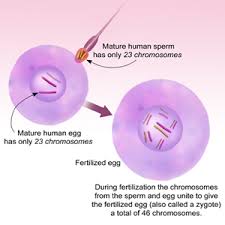
Reads: -Mature human sperm has only 23 chromosomes
- Mature human egg has only 23 chromosomes
- Fertilized egg
- During fertilization the chromosomes from the sperm and egg unite to give the fertilized egg, (also called a zygote), a total of 46 chromosomes.
Reproductive System Notes
Reads: -Mature human sperm has only 23 chromosomes
- Mature human egg has only 23 chromosomes
- Fertilized egg
- During fertilization the chromosomes from the sperm and egg unite to give the fertilized egg, (also called a zygote), a total of 46 chromosomes.
When does a person become a person?
DNA Project Reflection
Summarize the lab activities we did in class in order to explore the 4 steps of DNA processing.
The electrophoresis gels included several steps.
You see, the gels show which suspect, if any, was the real perpetrator. In that way, the convicted person, if their DNA does not match up with the DNA evidence, is proven to NOT the criminal!
For our project, we all split into groups of three or four, and picked an exonerated person who interested us in some way. The goal was to learn about this person- learn how they were falsely convicted of a crime and how they were exonerated using DNA evidence. Our group, which included myself, Clara, and Kinjah, originally chose a man we had learned about in class named Collin, because he had dreadlocks and because he had fought himself out of prison by gaining his own evidence. But because we had already studied him, we switched to another man Colleen, our biology teacher, suggested. His name was Herman Atkins. Our only criteria was that he had dreadlocks. And yes, he did. (I’ll explain- the main reason why it was important for us for our exoneree to have dreadlocks is because Kinjah, my classmate whom Clara and I were taping, has dreadlocks, so we just thought it would be cool if our exoneree had them, too.) Then, we began to create our sculpture, which was of the exoneree. Clara and I used tape to create our sculpture, just as everyone else doing the project did. We had Kinjah in many very awkward poses, but finally, when we taped them all together, got the effect we had been hoping for: Our exoneree, Herman Atkins, was in the air, his arms in the middle of a ka-cha, one leg bent and the other straight, so it looked like he was kicking down an invisible barrier. His dreads were many, and they were flying all about him. His pose was like this because we wanted him to be kicking down the door of oppression to the truth. Literally. So, we hung Herman from the ceiling, and spray-painted a door that said ‘oppression’ on one side, and ‘truth’ on the other. On the other side of the door was a DNA model, along with a pink sweater, a ring, and a flower. The DNA molecule and the pink sweater represent what sets him free in the end, which was DNA evidence, which was found on the pink sweater of the victim. The flower and ring, which were intertwined with the DNA model, represented the love Herman found after he was exonerated. This also represents that he was able to go off and finally live his life as a free man, as he was supposed to. May I also mention that there were several pictures of some boys growing up that were tacked on the wall next to our model of Herman, which represented the two sons that grew up without getting to have a good relationship and connection with their father. This was very hard for Herman, as was being in jail for so long without having actually committed the crime. (The rather angry pose that we put him in also represented his anger in losing those years of his life- 11½ of them.)
I learned a lot about DNA, as well as the groups of cells and single cells that make up the DNA double-helix: The ___, A, T, C, and G; how a pentose sugar, a phosphate group, and a ___ make up a ___. I learned about how there’s one sugar on each end of the double-helix, and only on one backbone, which is made up of sugar and . I learned that sometimes, police officers and the government jumps to conclusions when dealing with someone who may be the perpetrator of a crime- they are not always fair. Now, I do not mean to put a bad say on all police officers and government employees, I just mean to say that sometimes, they cut the corners just to have someone to put the blame on- a scapegoat. (But don’t politicians to that anyways? Just kidding.) I connected to this project because of the art piece of it- I am a very artistic person, and so it was a bunch of fun to tape Kinjah: I was able to more clearly see the lines of a body, (which could help my drawing,) and I really enjoyed looking at all the layers of tape we piled upon him. I know that sounds weird, but it’s the truth. Not only taping Kinjah, but to also making the gels we made before we started the ‘official’ project on our exonerated persons: It was so cool to inject the colored DNA into the wells of the gel and to look at it from all possible angles, sometimes viewing them as stranded bits of color in a semi-clear surrounding. And, then, after the DNA had moved within the gel towards the positive- charged electricity, so each DNA sample had a different pattern, it reminded me of watercolors. I can’t describe it exactly, but I suppose it would take an artistic type of mind to see it that way. In all, I am very proud of the work Clara and I did on taping Kinjah, as well as the research on Herman Atkins I did, and the pieces that we put in (the flower, pinks sweater, and ring,) to help connect the project to the man. I spent a ton of time researching, typing up the Artist’s Statement, and taping Kinjah. We all did. And, I am quite proud of the idea Clara and Kinjah had about making Herman be in a ka-cha pose, because, I must say, I thought it was the most original pose out there! If I could do this project over, I would actually probably ask Colleen about doing a project that would have to do with DNA more directly- perhaps I would make a huge diagram of a DNA double-helix, or something. I just didn’t feel that I learned a lot about DNA when we were studying the exonerated. Maybe that wasn’t the whole goal. But I think I might’ve thought up some other ideas of a project to do that could help me learn more about DNA.
DRINK NOW, PAY LATER
DRINK NOW, PAY LATER podcast by Karen Hopkins
“Drunk and stupid is no way to go through life, son.” - The words of Faber’s Dean Wormer
The fact that drinking can make you have bad judgment has been pounded into teens since we were in fourth grade. By now, when we are in high school, we know that drinking heavily leaves you sleepy, stupid, and prone to making bad decisions. But, after the dreaded hangover, that is, life goes back to normal, right? A study that was in the Proceedings of the National Academy of Sciences, and podcasted on Scientific American by Karen Hopkins, shows that ‘drinking in adolescence can set you up for a whole lifetime of bad decisions.’ Of course, it’s a question that whether people who drink alcohol when they’re young are also going to be the same people who make bad decisions when they’re older; however, that question has remained unanswered. In a study done on alcohol intake in rats, the results showed that their ability to make good decisions was impaired when they were adults, too. This was showed when the rats had the tendency to ‘chase after rewards with associated his risk rather than taking a sure thing.’ So, the lesson here is, don’t drink, because it may bring unalterable changes to your behavior and thinking, which could lead to disastrous consequences from now to when you’re older, too. Here’s the thing: There’s probably no stopping teens from drinking. Although I have no experience with this personally, I do not think they will want to stop. I don’t think teens who drink will really care about the effects- maybe because they’re not the type to care in the first place, or because, sometimes as I’ve seen, we, as teens seem to think we are invincible, and the problems and consequences that come with the things we do will somehow skip over us. We believe we are immune to it all- car crashes, cancer, and the unnecessary risks we take that will someday bring us to our knees. I personally got a lot out of this podcast because it now gives me reason not to drink, even when I am pressured to and when I know some of my classmates do. And if I am ever in a situation where there is a chance for me to tell people this information, I will. I do not know if my words will be taken into account. I doubt whoever I am talking to will immediately throw down their drink and promise sobriety. But hopefully, hopefully my words will stay in their mind until they do have the power to turn away from the drinks. That is all I can hope for. And please know that I am not against adults over 21 drinking in moderation… I am only worried for my classmates and others who have or may acquire a habit of drinking and the things that may befall them, consequences for their actions, unbeknownst to them when they took their first sip.


